A Weekly Update from the Red River Farm Network
Friday, April 04, 2025

On the Road Again – This year’s South Dakota FFA state convention, held in Brookings, includes over a dozen competitions, a career development event, and a day of service. Join us for coverage from the event April 3rd through the 5th presented by SD Farmers Union, SD Corn, and Full Circle Ag!
No Big Surprises in USDA Planting Intentions Report – U.S. farmers are expected to plant 95.3 million acres of corn in 2025, a 5 percent increase from last year, according to the USDA’s latest report. Soybean acreage is estimated at 83.5 million acres, down 4 percent from 2024. Wheat planting is projected at 45.4 million acres, a 2 percent decline, marking the second-lowest total since records began in 1919. Winter wheat accounts for 33.3 million acres, while spring wheat is estimated at 10 million acres.
USDA Reports Lower Corn Stocks, Higher Soybeans and Wheat – U.S. corn stocks totaled 8.15 billion bushels as of March 1, down 2 percent from last year. On-farm storage declined 11 percent, while off-farm stocks rose 12 percent. Soybean stocks reached 1.91 billion bushels, a 4 percent increase from 2024. On-farm storage fell 6 percent, but off-farm stocks climbed 13 percent. Wheat stocks totaled 1.24 billion bushels, up 14 percent from last year. On-farm and off-farm wheat storage both increased by double digits. Other notable changes include a 42 percent jump in grain sorghum stocks, while sunflower stocks plummeted 52 percent compared to last year.
Ceasefire Includes Black Sea Grain Deal – Russia and Ukraine have agreed to a ceasefire. Agriculture was included in the negotiations between the United States and Russia. The White House reports the U.S. will help restore Russia’s access to the world market for agricultural and fertilizer exports. The arrangement also includes access to ports on the Black Sea and a payment system for these exports. There was a previous deal worked out between the United Nations and Turkey that allowed Russia and Ukraine to ship grain on the Black Sea, but Russia backed out of that agreement in July of 2023.
The Approach for Reciprocal Tariffs Narrows – Reciprocal tariffs are scheduled to be implemented on Wednesday. In comments made at the White House, President Trump said many countries will be given a break. “We may take less than what they’re charging because they’ve charged us so much, I don’t think they could take it. In other words, they’ve charged us so much that I’m embarrassed to charge them what they’ve charged us, but it’ll be substantial and you’ll be hearing about that on April 2.”
China’s Tariffs Cost Canadian Farmers – China’s 100 percent tariff on Canadian canola products and a 25 percent tariff on pork and seafood are causing major disruptions for Canadian growers and exporters. Sask Oilseeds Chairman Dean Roberts warned of serious challenges ahead. “We’re facing trade wars, tariffs, and disputes with two of our large trade partners.” The pork industry is also bracing for economic fallout, particularly in Manitoba, the country’s largest pork producer and exporter. Manitoba Pork General Manager Cam Dahl highlighted the widespread impact. “If high tariffs remain in place, we are going to see a reduction in production, and we’re going to see reductions in processing. And that’s going to cost our economy, and that’s going to cost jobs.”
Canola Minute – This is the Canola Minute. Northern Canola Growers Association Executive Director Barry Coleman talks about recent meetings in Washington D.C. Click here to listen.
India Cuts Tariffs on U.S. Ag Products – India has offered tariff reductions on U.S. agricultural products, including lentils, as part of efforts to ease trade tensions ahead of President Trump’s reciprocal tariffs set to take effect on April 2nd. The concessions, discussed during trade talks in New Delhi, also include reductions on tariffs for almonds, cranberries, and other U.S. farm exports.
NFU President Warns of Trade War Impact on Farmers – National Farmers Union President Rob Larew calls on U.S. leaders to address the fallout of escalating trade tensions with the European Union. In partnership with the Italian farm organization Coldiretti, NFU sent a letter to President Trump urging diplomatic solutions to avoid retaliatory tariffs. “At the end of the day, this has a real impact on farmers out there,” Larew said, emphasizing that farmers are often on the front lines of trade disputes. Larew also warned of the lasting consequences of past trade conflicts, particularly with China. “We suffered real losses during the last trade war with China and lost markets that we still haven’t been able to recover,” he said. While short-term government payments have helped offset some losses, Larew stressed that farmers need stable markets, not subsidies.
Trump Administration Pushes for Biofuels Policy Consensus – The Trump administration is urging oil and biofuel producers to collaborate on future U.S. biofuels policy to avoid past political conflicts over the Renewable Fuel Standard. Disputes over blending volumes and small refinery exemptions have long divided the industries. Recent discussions have focused on increasing the renewable diesel and biodiesel mandate from 3.35 billion to 5.5 billion gallons. However, ethanol blending remains capped at 15 billion gallons, with little room for growth due to stagnant gasoline demand. The debate over small refinery exemptions continues to be a key sticking point.
South Dakota Farm Bureau Meets with Officials in D.C. – South Dakota Farm Bureau members traveled to Washington, D.C., for their annual fly-in, meeting with policy experts and government officials. President Scott VanderWal said the delegation received updates from American Farm Bureau lobbyists before discussing trade issues with Mexican and Canadian embassies representatives. “We met also with some folks from the Mexican embassy, and they talked about the trade issues that are going on, talked a little bit about the GMO-corn dispute,” VanderWal said. Tariffs were a key topic of discussion. VanderWal said many members support the administration’s approach. “Most of the people that I talk to that are members are saying, ‘Let’s let him do his thing. He’s got a way of getting what he wants,” he said. “We don’t necessarily agree that tariffs is the way to start, but that’s not the way he negotiates.”
Glessing Testifies Before House Subcommittee – Minnesota Farm Bureau President Dan Glessing testified before the U.S. House Subcommittee on Highways and Transit last week, emphasizing the need for a reliable transportation system to support American agriculture. “The products we grow and raise must travel far beyond our farm gates to reach markets, processors, and consumers,” Glessing urged Congress to address supply chain challenges and reaffirmed Farm Bureau’s support for the Infrastructure Investment and Jobs Act, National Highway Trust Fund fees, and exemptions for agricultural haulers.

What’s Hot, What’s Not in the Markets – In today’s update on What’s Hot, What’s Not in the Markets, Martinson Ag Risk Management President Randy Martinson says gold continues to set all-time highs, while cattle remain strong. What’s not hot? “Chicago and Minneapolis wheat traded new contract lows last week. That’s in the face of the potential for moisture movement to the winter wheat region, but also because of the expectation that we might see a black seed grain initiative deal done.” Listen to the report.
More Corn Planting Ahead – Farmers are likely to plant more corn this spring than initially projected, driven by strong demand for corn seed. Jim McCormick, co-founder of Agri-Market.net, says, “The demand for corn is ferocious,” adding that in some areas, certain corn genetics have already sold out. McCormick attributes the shift to better profitability prospects in corn compared to soybeans. “When you look at the spring price of corn, it’s a nickel above where it was a year ago, while beans are a dollar below a year ago,” he said. He added that with current prices, “no one’s making money” on soybeans.
USDA Reports Decline in Weekly Export Sales – U.S. corn export sales for the week ending March 20 totaled 1.04 million metric tons, down 33 percent from the previous week and 6 percent below the four-week average, according to the USDA’s weekly export sales report. No new crop corn sales were reported. Combining old and new crop, Soybean export sales reached 360,000 metric tons, a 2 percent increase from the prior week but 27 percent below the four-week average. Wheat export sales totaled 100,000 metric tons, down 54 percent from the previous week.
Farmers Urged to Check FSA Website for ECAP Payment Details – USDA’s Emergency Commodity Assistance Program (ECAP) payments will be issued as approvals are processed, but initial payments will be reduced by 85 percent to prevent exceeding available funding. USDA Deputy Under Secretary Brooke Appleton said, “More details and online tools are available on the Farm Service Agency website. We encourage producers to visit the site and utilize the available resources to understand how these payments will be distributed.” The adjustment ensures a fair distribution of funds among eligible producers, with additional disbursements possible as applications are reviewed. Appleton reassured producers that payments would continue as approvals are finalized.
Farmers Avoid Costly Treasury Filing Requirement – Farmers, ranchers, and small business owners are no longer required to file beneficial ownership information with the Treasury Department’s Financial Crimes Enforcement Network. A new interim rule ends the Biden-era mandate, which was set to take effect January 1. National Cattlemen’s Beef Association’s Kent Bacus called the change a major relief, saying, “There was a lot of concern that many businesses who were unaware of this could get caught up in the compliance part of it. And that could have led to prison time for some people.” The rule now limits the reporting requirement to foreign-owned companies.
Nearly $1 Million Raised in Out of the Ashes Disaster Relief – The North Dakota Stockmen’s Association and North Dakota Stockmen’s Foundation delivered nearly $1 million to victims of the October 2024 wildfires. These two organizations started the Out of the Ashes Wildfire Disaster Relief Fund with their own $50,000 donation and invited others to support the effort. The combination of 80 mile-per-hour winds and very dry air resulted in significant losses for cattle ranchers and landowners in western North Dakota. A total of 120,000 acres were consumed by fire.
Implications for Agriculture in Grocery Pricing Bill – The Minnesota Retailers Association and AgriGrowth have announced their opposition to the Consumer Grocery Pricing Fairness Act. This bill in the Minnesota Legislature promotes fairness in grocery pricing. It accomplishes that by restricting competitive pricing and requiring suppliers to disclose pricing contracts with large retailers. AgriGrowth said the legislation would have “huge impacts on Minnesota’s food and agriculture industry.”
FFA ‘a Perfect Fit’ for Civics Seal Proposal – A proposal in the Minnesota Legislature is gaining traction that would create special recognition on a student’s diploma for civic engagement. A dozen other states already have a ‘civic seal’ program. Minnesota FFA Foundation Executive Director Val Aasvold said this bill is in the wheelhouse of the FFA. “As soon as we found out about it on the FFA side we knew that it was a perfect fit because we’re all about developing that student to be a public speaker, to work through parliamentary procedure and to engage their elected officials.” The bill has bipartisan support.

ND Legislative Report – North Dakota Grain Growers Association Director Sarah Lovas speaks in favor of House Bill 1318. Click here to listen to the report.
Hansen Calls for Additional H5N1 Safeguards – The H5N1 virus has been confirmed in a central Minnesota dairy herd. Since last summer, this is the first positive detection in one of the state’s dairy farms. It was discovered through mandatory testing. House Agriculture Committee Co-chair Rick Hansen responded by calling for increased safeguards. Hansen’s proposal includes testing of retail milk, voluntary testing for poultry and dairy workers and monitoring the wastewater supply.
Legislators Consider Funding for Fertilizer Innovation – A bill supporting Minnesota-made fertilizer production was discussed in the Minnesota House Agriculture Committee. Introduced by Representative Nathan Nelson, the proposal seeks to establish a grant program to help convert co-products from existing manufacturing processes into viable fertilizers. Olivia, Minnesota, farmer Randy Tersteeg testified in favor of the bill, stressing the need to replenish soil nutrients. “If you don’t replace these nutrients, our soil becomes more depleted and depleted over time, and production will decrease.” Tersteeg highlighted Minnesota’s potential to utilize locally sourced materials instead of relying on foreign fertilizer imports from Canada, Russia, and Belarus. “Minnesota has a supply of many products that are produced as co-products of other streams,” he said, citing animal manure, calcium from sugar beet production, potassium from wood ash, and biological additives. The bill remains under review by the committee.

Agricult-HER: Stephanie Sinner – From a small mountain valley in southwest Colorado to the prairies of North Dakota, Stephanie Sinner has always been rooted in agriculture. Former North Dakota Agriculture Commissioner Roger Johnson took a chance on a recent college graduate and hired Sinner for a job as a policy analyst. “I had never been to the state and didn’t know a soul, but thought let’s go and give this a whirl,” said Sinner. “I’m on year 20 of my two-year plan for North Dakota. This summer will be 20 years that I moved here and really landed in a pretty amazing place for just fantastic opportunities to work in agriculture.” Sinner is now the executive director of the North Dakota Soybean Council. Watch the interview.

Agricult-HER: Amber Wood – Amber Wood is the executive director of the North Dakota Livestock Alliance, but she wasn’t born into agriculture. “I’m kind of an outlier.” While in high school, she had friends who were farm kids. “I started hanging out with them and I was like, hey, this sounds like a pretty rockin’ lifestyle.” She had a job as a teenager as a milker on a dairy farm south of Mandan. “I was hooked and went to school and graduated with an animal science degree from NDSU. I was hired as the first employee in the United States by a Northern Irish family that came over to South Dakota to milk cows. So, and thankfully they taught me so much then and they’re still teaching me things today. We’re still the best pals.” That started her lifelong journey in animal agriculture. Wood is now helping to grow the dairy, livestock and poultry sector in North Dakota. “It’s an exciting career.” Watch the interview on the RRFN YouTube Channel.


Agricult-HER: Alicia Harstad – According to Barnes County Extension Agent Alicia Harstad, there aren’t that many barriers for women in agriculture today. That’s because of the work of the women that went down the road before her. “I really appreciate all of the things that other women have done,” said Harstad. “It’s interesting, one (female) county agent retired not long ago who literally had been one of the only female Extension agents. Now we have a lot of female Extension agents so a lot of things have changed in agriculture; you now see more women everywhere in agriculture.” Click here to watch the interview.

Agricult-HER: Nicole Koziolek – The Agricult-HER series continues with Nicole Koziolek, who is a retail marketing manager for Rosen’s Inc. She also carries on the legacy started by her grandfather and has an ownership stake in the family farm. When she attended school or was part of the FFA, Nicole was always looking for the next goal. “Right now, I’m very, very happy with where I’m at and I’m wanting to grow in this position.” Rather than looking for the rung in the corporate ladder, Koziolek is focused on improving her current skills. “I’m focused on what can I do to bring new ideas to retailers.” Go to RRFN’s YouTube channel to watch the video interview.


North Dakota Gelbview Association Spotlight – Throughout the winter season, the North Dakota Gelbvieh Association has been delivering information about the Gelbvieh breed. As calving season kicks in, we have our final report in the series. David Larson of Lost River Livestock says the Gelbvieh breed is known for moderate cow size “to keep that mature cow size in check to keep your feed costs and feed intake in a reasonable range while still bringing in a calf that weans off at close to 50 percent of the mama cow’s body weight.” Listen to the report.

Central Plains Dairy Expo Held in Sioux Falls – The Central Plains Dairy Expo was held at the Denny Sanford Premier Center in Sioux Falls, drawing dairy producers and industry professionals from across the country and beyond. “When we put this show on, we focus on these dairies in the Central Plains region, but we are finding more and more people coming from all over the nation and worldwide,” said Kristy Mach, Central Plains Dairy Executive Director. The expo featured vendor showcases, breakout sessions, and networking opportunities designed to highlight the latest advancements in dairy production. In addition to industry discussions, attendees were treated to a variety of dairy-themed refreshments throughout the event.
MPCA Seeks Public Input on Feedlot Rules – The public comment period is open for the Minnesota Pollution Control Agency’s proposal to amend the state feedlot rules. The MPCA website says the purpose of this measure is to improve land application of manure to protect water quality and avoid fish kills. Public comments will be accepted until July 22. The last major revision of the feedlot rules in Minnesota was 25 years ago.

Tariff Uncertainty Pressures Dairy Markets – Dairy markets are feeling the strain as uncertainty surrounding trade tariffs impacts milk prices. Mark Newman, a market analyst with CIH, highlighted the recent price volatility, noting that Class III milk has dropped significantly in recent months. “You know, we were at $19.50, even $20. And now you’re seeing nearby Class III at $17. So, it’s fallen to two to three dollars just from these tariffs,” Newman explained. With tariffs on Mexico and Canada currently in a moratorium until April 2, the market remains in a holding pattern, awaiting further developments. In response to fluctuating prices, dairy producers are taking steps to protect their margins, particularly on feed costs. “A lot of guys, a lot of our clients have been booking their physical meal, whether that be canola or soybean meal,” Newman said. He also emphasized the importance of maintaining flexibility in risk management strategies, particularly during the seasonal lull in demand.

Minnesota Dairy Farmers Drive Sustainability Efforts – Minnesota dairy farmers are playing a key role in sustainability initiatives by working with consumer packaged goods companies to track carbon intensity and conservation efforts. Lucas Sjostrom, managing director of the Minnesota Milk Producers Association, highlighted the evolution of these efforts, which began in Wisconsin a decade ago. “They made some farmer-led groups and tried to put the power in the hands of the farmer in controlling the narrative,” Sjostrom explained. The initiative has grown significantly with funding from a $50 million climate-smart grant, expanding participating farms from 53 to 150 in two years. Sjostrom emphasized the long-term potential of sustainability tracking in the dairy industry. “We want to make something that the dairy market can utilize from the farmer through the supply chain to the end user at the store or restaurant.”
Export Challenges and Cheese Surplus Weigh on Dairy Market – Trade uncertainty and rising cheese production are putting downward pressure on dairy prices. Sarina Sharp, a market analyst with The Daily Dairy Report, discussed these challenges with producers at the Central Plains Dairy Expo in Sioux Falls. “Unfortunately, I think that lower is the more likely path, especially for producers in this Central Plains region who mostly get Class III milk revenue,” Sharp said. “We are starting to see count numbers tick up, and we have invested a lot in cheese production.” Uncertainty surrounding trade policies is also affecting international demand. Sharp noted that while buyers are still purchasing, they are cautious about future commitments.
Ranchers Need Extra Spring Moisture to Meet Grazing Needs – Over half of North Dakota is experiencing drought conditions heading into the 2025 planting season, with around 12 percent of the state in the abnormally dry range. NDSU Extension Livestock Environmental Stewardship Specialist Miranda Meehan says ranchers will likely need some extra moisture this spring to meet grazing requirements for their cattle. “For the northern part of the Red River Valley we’re projecting above one hundred and fifty percent of normal precipitation from April through July 1 is needed to achieve normal forage production based on current soil moisture levels. In the southern part of the state, the southeast, we have drought conditions and we’re dry but not as dry. There we’re looking at about one hundred and thirty percent of normal precipitation to get to normal or above normal forage production. It really is going to depend on that April through July precipitation.” Meehan warns ranchers not to get too early of a start with grazing this year. “Especially when we’re in drought conditions and things stay dry, it’s going to be really easy to get ahead of our forage and run out of our forage. So, we want to make sure we’re waiting until our grasses reach grazing readiness.”
Spring Calving Season Kicks Off Amid Lingering Winter Chill – Spring calving season is underway despite some lingering winter weather. NDSU Extension Livestock Management Specialist Lacey Quail discussed how the weather impacts things. “The change in temperature from just over a month ago has been helpful. Warmer temperatures for spring calving brings challenges when mud becomes prevalent in some of these areas. But overall, I think people are happy to have a little bit warmer weather for calving.” Though it’s colder on the eastern side of the state, Quail says that moisture is still a concern. “There’s a lot that is kind of the same when we talk about moisture. Being able for cattle to get out of the wind and have bedding that they can stay dry are the biggest things when it comes to snow and frost and keeping cattle able to stay in their ideal temperature.”

Beet Stock Values – Last week, there were three American Crystal Sugar Company beet stock sales totaling 134 shares at $5,600 per share. This information was provided by Jayson Menke and Acres & Shares, who weekly tracks all brokered sales and provides a beet stock snapshot. To sign up for the weekly update during the trading season, please click on the link, https://www.acresandshares.com/updates/
CIH Acquires Advance Trading – Advance Trading has new ownership. Commodity & Ingredient Hedging, also known as CIH, has announced its acquisition of the Bloomington, Illinois-based Advance Trading. The companies will continue to operate under their current names.
Annual Revenues Up for Smithfield Foods – Smithfield Foods finished its fiscal year with adjusted earnings of $1 billion. That’s up from $258 million in Fiscal Year 2023. Profits increased in its three business segments: hog production, fresh pork and packaged meats.
Bayer to Appeal Latest Roundup Case – In the latest legal wrangling over the use of Roundup, Bayer is being ordered to pay more than $2 billion to settle one man’s cancer lawsuit. Bayer plans to appeal this case, saying the company believes the verdict should be overturned and the “unconstitutional damage awards eliminated or reduced.”
Dry Bean Scene – In this week’s edition of the Dry Bean Scene, NDSU Extension Weed Management Specialist Joe Ikley talks about this year’s desiccation trials and preparation for the upcoming growing season. Listen to the report.

SD Corn Comments – In this week’s SD Corn Comments, Madison Raymond, a student from the Ethan FFA chapter, talks about the SD FFA Convention this week. Listen to the report.
Fighting Nematodes and Wireworms in Potatoes – ARINO insecticide/nematicide has received EPA registration to manage nematodes and wireworms in potatoes. ARINO will be used in on-farm demonstrations during the 2025 growing season. The Pro Farm Group is bringing this product to market. Pro Farm Group, based in Davis, California, concentrates in the discovery, development and commercialization of naturally derived pest management and plant health technologies.

CHS CEO Talks Ag Economy, Readiness at Bergland Lecture Series – The second of the University of Minnesota’s Bob Bergland Lecture Series, honoring the late, great Ag Secretary, was held last week at the Crookston campus. Guest speaker and CHS President and CEO Jay Debertin spoke about the current state of U.S. agriculture and the upcoming planting season. “We are set. We’re ready; fertilizers are in good shape. Crop protection products are in excellent shape. Fuel is out there. We’re ready to go, and I think most farmers are too.” Tougher economic times mean farmers are fighting for every bushel. “It’s a tough economic landscape right now for certain. We have to make every bushel count. Commodity prices are very challenged and you’re seeing that in farm income data, especially before any government supplemental payments that were approved in December, and CHS is feeling that. We do better when the farmer does better, and when the farmer struggles that affects us as well. So, we’re facing a bit of a challenge this year, but we’ll find our way through it and do what’s necessary to come out on top.”
New Active Ingredient, Increased Flexibility – A new mode of action is available for the cereals market this year. Corteva Portfolio Marketing Lead Drew Clark says Tolvera herbicide has an active ingredient that is new to the cereals market. “This past year, a lot of growers had to deal with a lot of hard-to-control weeds, like kochia, waterhemp and pigweed,” said Clark. “Being able to introduce brand new actives in the cereals space is a big deal.” In addition to the new tool to deal with resistant weeds, Clark said it delivers more flexibility for the following season. “Think about your highly sensitive crops, like lentils, peas, potatoes, sugarbeets, Tolvera allows a nine-month plant back so it gives a grower a lot of flexibility when they’re thinking about their crop plan.”
Three Goals When Evaluating Biologicals – Biologicals are the fastest-growing product category in the crop protection business. “We’ve been approached by about 750 different companies that want to sell us biologicals and get a private label with us,” said Andrew Scholtz, CHS retail product specialist. “So far, we’ve brought three biological products to the market so you can imagine how saturated that market really gets.” Scholtz, who serves western South Dakota and southwestern North Dakota, said CHS has three goals when evaluating biostimulants. The product must be easy to use, cost-effective, and evaluated closely. When used correctly, these products can lay the foundation for the rest of the season. “When we look at early-season conditions like drought or the flip side with cool weather conditions, the biostimulants help with those kinds of things, getting that seed up and out of the ground. With the nutrient package, we’re looking to foster that early-season seed vigor and improve emergence.” In an interview with the Red River Farm Network, Scholtz also discusses the dry weather concerns in the western Dakotas and highlights new products from the CHS lineup, Abivium and Soiltrate.
Corn Matters – In this week’s Corn Matters, Brigid Tuck, a senior economic impact analyst with the University of Minnesota Extension, discusses her recent report on the economic contribution of Minnesota’s ethanol industry. Click here to listen.
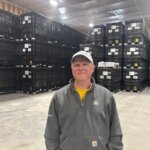
Larson Seed and Agronomy Opens New Facility Ahead of Spring Planting – Larson Seed and Agronomy held an open house for their new seed treatment facility and warehouse near Fosston, Minnesota. Owner Matt Larson is happy the construction is done, and they can focus on getting to work. “We have a new facility that we broke ground on last June. We put up a Pioneer seed facility here between Fosston and Clearbrook and it’s pretty much done. We’re ready to run seed this spring and we should be in good shape once the weather finally cooperates.” Corn and soybean acreage for this season should line up with expectations. “We’re looking at some increase in corn acreage for the year. Soybeans are stable to maybe down a little bit, and then some of the other specialty crops are going to be increased. Sunflowers, canola, things like that.” His advice to farmers preparing for the upcoming planting season? “Make sure they’ve got all their seed dialed in like they need to be and get their acreages figured out. We are hearing some things in the chemical industry as far as certain products may be getting a little bit tighter, and some price increases happening. Then check your planters. Make sure that your planters are ready, getting everything dialed in so that you can get everything put in the ground as well as possible.”
Last Week’s Trivia- Jerk chicken is a spicy meat dish that is associated with Jamaica. Mohill farmer Gene Glessing wins our weekly trivia quiz. Runner-up honors go out to Peter Carson of Carson Farms, Brad Farber of Anglo American, Lee Hutchinson of Farm Credit Services of Mandan and Kevin Praska of Stone’s Mobile Radio. The ‘first 20’ rounds out with Ron Claussen of Ag Media Research, Randy Knudsvig of First State Bank, Lyle Orwig of Certified Ag Dealer, Ramsey County farmer Paul Becker, Jim Altringer of Dakota Plains Ag, Al Withers of Park Rapids, Barry Walton of BW Farms, Hope farmer Al Julison, The Farmer editor Kevin Schulz, Ron Dvergsten of Northland Farm Business Management, Bob Lebacken of RML Trading, Pisek farmer Ernie Barta, retired feedlot officer Al Langseth, Lawton farmer Dennis Miller and John Martin of Bayer.
This Week’s Trivia- Cub Cadet, Troy Bilt, Toro, Altoz, Bolens and Grasshopper are brand names of outdoor equipment. What type of equipment is represented by these brands? Send your answer to don@rrfn.com.
| Contact RRFN | Don Wick (701) 795-1315 |
Tyler Donaldson (701)-795-1315 |
Jamie Dickerman (701)-795-1315 |
| RRFN Affiliate Stations | |||
| Aberdeen, SD – 105.5 FM | Ada, MN – 106.5 FM | Bagley, MN – 96.7 FM | Bemidji, MN – 1300 AM |
| Bismarck, ND – 1270 AM | Casselton, ND – 103.9 FM | Cavalier, ND – 105.1 FM | Crookston, MN – 1260 AM |
| Devils Lake, ND – 103.5 FM | Fergus Falls, MN – 1250 AM | Fosston, MN – 1480 AM | Glenwood, MN – 107.1 FM |
| Grafton, ND – 1340 AM | Jamestown, ND – 600 AM | Langdon, ND – 1080 AM | Mahnomen, MN – 101.5 FM |
| Mayville, ND – 105.5 FM | Roseau, MN – 102.1 FM | Rugby, ND – 1450 AM | Thief River Falls, MN – 1460 AM |
| Wadena, MN – 920 AM | Warroad, MN – 92.5 FM | Worthington, MN – 730 AM | |
FarmNetNews is a production of the Red River Farm Network. RRFN is based in Grand Forks, North Dakota and provides news to farmers and ranchers across Minnesota, North Dakota and South Dakota.