A Weekly Update from the Red River Farm Network
Tuesday, March 03, 2026

What’s Shaping Agriculture This Week-Missiles are flying in the Middle East, with the Trump Administration beginning military action in Iran over the weekend. In addition to the ongoing market implications with the war, this is farm bill week on Capitol Hill. The House Agriculture Committee will begin marking up Farm Bill 2.0 on Tuesday. The 30th edition of Commodity Classic is in the books. The San Antonio event had record attendance of 12,000-plus. You’ll find complete coverage of Commodity Classic in this week’s FarmNetNews. RRFN extends our thanks to our sponsors for making that coverage possible. This past week was also National FFA Week, an opportunity to shine a light on the organization’s impact. During March, RRFN also highlights women in agriculture with our special Agricult-HER series. Our first episode launched this morning, featuring 5th-generation farmer Billie Lentz of Rolla, North Dakota. Check it out.

SOTU Cites Lower Consumer Prices, Defends Tariffs – President Donald Trump used his State of the Union Address to declare what he called a historic economic turnaround, telling a national audience the country is stronger and more prosperous than ever. The president pointed to falling consumer prices and renewed market gains as proof his policies are working. “The price of eggs is down 60 percent,” said Trump. “The cost of chicken, butter, fruit, hotels, automobiles, rent is lower today than when I took office by a lot; and even beef, which was very high, is starting to come down significantly.” Trump also defended his use of tariffs, even after the Supreme Court ruling struck down key portions of his trade authority. “Despite the disappointing ruling, it’s saving our country the kind of money we’re taking in.” Trump said tariff revenue paid by foreign countries could eventually reduce reliance on income taxes while maintaining strong economic growth.

Ag Secretary Brooke Rollins Unveils Five-Point Policy Agenda – Speaking at the 2026 Commodity Classic in San Antonio, Agriculture Secretary Brooke Rollins laid out five key policy priorities. “First, we will continue to deregulate and get the government off of your back,” Rollins said, pointing to numerous regulations, such as the Waters of the United States and the National Environmental Policy Act. Expanded export markets and trade partners will also be a focus going forward. “In the coming months, we will advocate on behalf of you, our American farmers, in the Philippines, in Manila, in Turkey, in Istanbul, in Australia, in New Zealand, in Saudi Arabia, and in Vietnam. We have to open up these new markets if we’re going to have a prosperous future for our agriculture community.” Other priorities listed by Rollins included the promise to lower input costs, expand domestic markets for biofuels, and strengthening the farm safety net.
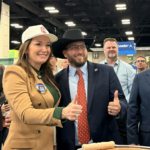
USDA Announces One Farmer, One File Initiative – Agriculture Secretary Brooke Rollins has announced a new initiative called One Farmer, One File, which aims to streamline and modernize records across Farm Service Agency, Natural Resources Conservation Service, and Risk Management Agency systems. “These new modern systems will not replace the current systems that are already in place. These FSA offices will stay open. You will always have someone to sit down with to help with paper applications and traditional acreage reporting,” said Rollins before the gathered crowd of one thousand plus in attendance for the general session. Rollins emphasized that the One Farmer, One File initiative will provide another filing option for farmers, “What we are doing in addition to that is adding a modern digital pathway for those who want it.” The One Farmer, One File network is not expected to be finalized until 2028.

Interview: Hagert Tapped for USDA Post – As RRFN first reported three weeks ago, Emerado, North Dakota farmer Jared Hagert is the new USDA deputy administrator of farm programs. In an interview during Commodity Classic, Hagert said he met with USDA Undersecretary Richard Fordyce and FSA Administrator Bill Beam while on a trip to Washington, D.C., last fall. Hagert, Fordyce and Beam had served together on the United Soybean Board. “I had no idea that they were looking to fill any position,” said Hagert. “One conversation led to another, and here we are.” Taking the federal job meant Hagert resigned from the Legislature and left the farm. “It was really odd leaving home for the last time, knowing I wouldn’t be back to put a crop in for the first time in over 30 years.” Listen to the full interview, including an update on the bridge assistance for sugarbeet producers.

Farmer Bridge Assistance Enrollment Off to Strong Start – Enrollment in the USDA Farmer Bridge Assistance program is off to a good start. “We are using login.gov to help people verify signup online and that went exceptionally well; in fact, it exceeded expectations,” reports Bill Beam, administrator, Farm Service Agency. “You can go into your county office and sign up and that is also going very, very well.” Beam told RRFN there are 11 billion reasons to enroll, referencing the $11 billion in the FBA program for row crop farmers. Some of the early enrollees have already seen the money hit their accounts. Rulemaking is continuing for the specialty crop portion of FBA. Beam said an announcement would be made in “the not too distant future,” but not within the next two weeks.
MN Corn Matters – In this edition of MN Corn Matters, Minnesota Corn Growers Association Past President Richard Syverson discusses E-15. Click here to hear the update.


Tariffs Deepen Stress on Soybean Sector – The Farmer Bridge Assistance is on the way to producers. For North Dakota Soybean Growers Association President Justin Sherlock, it’s none too soon. “I think most producers are just like me, they’re waiting to get that bridge payment so they can hurry up and pay some bills from last year,” said Sherlock. “In most cases, they’re just going to pay bills and loans from last year, we’re not even able to pay for a lot of this year’s inputs.” Even with the biofuels industry, the U.S. produces more soybeans than it can use domestically. “We need people to understand these tariffs have hit us hard on the inputs. They’re hitting us hard when countries retaliate against agriculture.”

Trade Relationships Are Critical – According to Minnesota Soybean Growers Association President Darin Johnson, trade must be a priority. “With soybeans, we’re exporting over half of our crop; it is a huge market for us and we need to keep those relationships open.” The U.S.-Mexico-Canada Agreement is up for renewal this summer. On the sidelines of Commodity Classic, Johnson said this is an important trade relationship. “Canada and Mexico are fantastic trading partners of ours,” said Johnson. “Times are tight; it’s lean right now and we need to figure out how we can trade back and forth and be somewhat reasonable.”
A Sense of Urgency – Wheaton, Minnesota farmer Jamie Beyer is serving her one-year appointment to the American Soybean Association executive committee. The one-year timeline creates a sense of urgency. “The issues aren’t new to anybody, yet it’s amazing how many federal government policies touch you on the farm from seed to harvest.” Making the numbers work in agriculture today remains the endgame. “We’re coming on our third year of agricultural losses, and looking to drive up some demand so we can get rid of some of that crop some of us are storing right now and have some optimism going into the new crop year.”
NDSGA Stand Up for PP Buy-Up Option – The North Dakota Soybean Growers Association successfully defended a resolution in the American Soybean Association delegate session to reinstate the prevented planting buy-up option for crop insurance. The Risk Management Agency eliminated the policy for this year, but ASA will now seek its return in 2027. Mayville, North Dakota farmer Brent Kohls describes that victory. “We thought going into the ASA (delegate session), Iowa and a few other states might have some opposition to it,” said Brent Kohls, a grower from Mayville, North Dakota. “Through some backside conversations with other states, we were able to keep them in our court.” Kohls will be in Washington, D.C. during the week of March 9 to lobby Congress regarding the updated farm bill.


Grassroots Policy Debate Seen at Corn Congress – Corn farmers established their policy priorities during Commodity Classic. “We started off the Corn Congress dealing with resolutions and things that give our grassroots organization the ability to pursue, from a policy standpoint, positions that we want to back up and promote,” said Wes Beck, MCGA president. Corn Congress is just the first opportunity for meaningful policy decisions each year. “We meet twice annually, once here at Commodity Classic and then we’ll meet again this summer in Washington, D.C.; there’s always a lot of things to discuss that are impacting our farmers.”
Young Farmers Are at Risk – Bob Worth represents the Minnesota Soybean Growers Association on the American Soybean Association board. Citing a tough farm economy, Worth said a rising number of foreclosures and mediation notices are happening in his state. “I lived those years in the 1980s and it’s not fun; young farmers are really going to hurt,” said Worth. “They don’t have the working capital; they don’t have the net worth; if they don’t have the backing of a really good banker, they’re going to be in serious trouble.” The Lake Benton farmer said that same scenario was played out during the farm crisis of the mid ’80s. “We lost a bunch of good, young farmers.”
Elevating the Risk Management Conversation – Risk management gets a lot of attention during policy development sessions at Commodity Classic. “The recent changes that the government’s made, for example, a prevent plant buy-up, these are issues that are top of mind for our producers and ones that we want to elevate to make sure that we help the government understand where our input costs have been, where our cost structure is such that we we need to protect going into the new season,” said Kyle Jore. Jore farms at Thief River Falls and serves as secretary for the Minnesota Soybean Growers Association. Jore is also the head of crop insurance development for Watts and Associates, a consulting firm that specializes in risk management solutions.

Year-Round E15 Push – The National Corn Growers Association continues to promote year-round E15. “It’s one of those things that helps everyone and we’re making a big push to get it across the finish line,” said Gwinner, North Dakota farmer Adam Ladwig, a member of the North Dakota Corn Growers Association board. “If you can get a hold of your congressman or woman to push E-15 across the finish line, that would help us get this over the finish line.” Ladwig, who is also a member of the NCGA Production and Sustainability Action Team, said the updated 45Z tax credit is still being digested. “Every time they add something new or make a change, it takes a couple weeks to try to figure out what their implementation process is going to be going forward, so we’re still taking a look at it.”


‘I Want to be Part of the Solution’ – Another Minnesotan is seeking a leadership role. Dana Allen-Tully is a past president of the Minnesota Corn Growers Association and is pursuing a position on the National Corn Growers Association board. “I really feel like agriculture’s at a pivotal moment, and I want to be part of the solution or at least be able to provide some perspective that our next generation is prosperous.” Policy changes have a role in making that happen. “We’d obviously like to get E15 across the finish line and we have the skinny farm bill that Chairman (Glenn ‘GT’) Thompson is bringing to the committee.” The NCBA board election is in July.
A Collaboration That Built a Farm Industry Powerhouse – It’s been 30 years since the very first Commodity Classic was held in Phoenix. Fairmount, North Dakota, farmer Wallie Hardie had an integral role in the creation of this huge event. “I was vice president of the National Corn Growers 31 years ago, and we thought we should get together with soybean growers and see what happens; we got together, and it’s amazing how this show has grown over the 30 years.” To bring together two major farm groups for a joint convention was a big undertaking. “At that time, we had the Corn, Classic, and they had the Soybean Expo,” said Hardie. “Te soybeans had to give a little bit. We had to find a name that would work and I think Commodity Classic worked for both of us.” Hardie said the show has grown far beyond their original vision.

A New Generation of Leaders Step Up – Minnesota Corn Growers Association board member Richard Syverson saw a shift in how issues were addressed at this year’s Corn Congress. “The current economic condition in the country has sharpened people’s focus on getting things done and not just talking about issues anymore, and we seem to have some of the new generation of younger folks stepping up.” E15 continues to be a priority. “We took a break and they had set up a QR code on the screen so that we could all call our senators and representatives right from the room with a message to encourage E15.”

North Dakota Delegation Supports Trump Action on Iran – North Dakota’s congressional delegation is backing President Donald Trump’s latest action against Iran, calling it a necessary response to escalating threats and nuclear concerns. Representative Julie Fedorchak said the president acted after diplomatic efforts failed. “I support President Trump’s decisive actions in response to Iran’s decades of relentless terrorist activity, its continued pursuit of nuclear weapons, and the grave threat it poses to the U.S. and our allies who seek freedom and peace.” Senator Kevin Cramer said the situation demanded strong leadership. “President Trump didn’t just sit on the sidelines like so many presidents before him, he confronted this terrorist regime head-on, and when America has the strength, the capability and the responsibility, as well as a political will to act, we rise at the right moment and that’s what’s happening right now.” Senator John Hoeven also voiced support, saying the coordinated strikes with Israel are intended to prevent Iran from rebuilding its nuclear weapons program and thanking U.S. servicemembers for their efforts.
Strait of Hormuz Tensions Jolt Ag Trade – Grain and oilseed markets opened sharply higher Sunday night after crude oil surged nearly 12 percent amid escalating conflict involving the U.S., Israel and Iran. Brent crude briefly spiked as traffic through the Strait of Hormuz, which handles about 20 percent of global oil shipments and a significant share of fertilizer trade, slowed to a near halt. In agricultural trade, soybean oil and hard red winter wheat led the rally, supported by higher energy prices. After the initial market reaction, energy, gold and grain futures settled down. The fertilizer sector is also watching closely. An estimated 25 to 35 percent of globally traded ammonia and urea moves through the Strait of Hormuz. Any prolonged disruption could tighten global supplies and lift prices, especially as spring application season ramps up.

A Selling Opportunity – Crude oil, gold, and even grains opened higher in response to the military action in the Middle East. According to AgBull Trading President Tommy Grisafi, traders had time to absorb the news, and markets calmed down. How should farmers respond to these black swan events? “These are selling opportunities,” said Grisafi. “This conflict, war, whatever you want to call it, it’s not going to go on forever. Even President Trump came out and said he thought it would be over in a few weeks. These are selling opportunities because we’re not running out of oil. We’re not running out of grains. We’ve had a wonderful pop in wheat. I actually have clients who are 25, 50 cents away from targets here in spring wheat.”
What’s Hot What’s Not in the Markets – In this week’s edition of “What’s Hot What’s Not in the Markets” Martinson Ag Risk Management President Randy Martinson says soybean oil is hitting new contract highs on friendly biofuels expectations, crude oil is surging on Middle East tensions, and soybeans and wheat are riding the momentum. But it’s not all bullish. Cattle had a brutal week and are testing major support levels. Click here to get Randy’s full breakdown on the markets that are moving and the ones that are struggling.

Demand Offers Optimism Despite Big Supplies – Grain markets continue to trade sideways as farmers balance old crop inventory with new crop pricing decisions. Total Farm Marketing Senior Market Advisor Bryan Doherty says consistent farmer selling has kept corn locked in a range, but there are encouraging signs for new crop. “What we’re seeing is that farmer selling is pretty light on the setbacks, but farmer selling is consistent, more so this year than other years, because farmers have a lot of unpriced corn.” Ample supplies continue to limit rallies, but there is room for optimism. “Two record crops in a row of Safrina corn out of Brazil, two record crops in the U.S. and yet we’re seeing vibrant demand and demand responds to low prices, so that’s the good news.” Doherty says most farmers still appear inclined to plant corn unless soybeans see a significant rally, adding that recent policy-driven volatility has been short-lived as markets quickly stabilized.
Farm Bill Markup This Week – The House Agriculture Committee will markup the farm bill this week, beginning late Tuesday afternoon. Lawmakers were scheduled to begin the process last week, but it was postponed due to the East Coast snowstorm. House Agriculture Committee Chair Glenn ‘GT’ Thompson is promoting the bill as a bipartisan piece of legislation. “Of the 181 bills that influenced H.R. 7567, 82 percent had bipartisan co-sponsors,” was part of a committee news release. “This is a bipartisan farm bill and calling it anything else is a serious mischaracterization of the facts.”
USDA to Vacate the South Building – The ‘for sale’ sign is up at the USDA South Building. Agriculture Secretary Brooke Rollins cited high maintenance costs and low occupancy as reasons for the closure. The building is being turned over to the Administration’s Government Services Administration.By the end of the year, many USDA employees will be relocated out of Washington, D.C. and into five regional hubs across the country.
Sugar Growers Push Back on Falling Prices – Red River Valley Sugarbeet Growers Association President Darren Hoyme says this year’s Washington, D.C. fly-in had a more urgent tone. “We’ve built a strong domestic industry that gives the consumers of America a reliable supply of sugar, but it’s being threatened now,” said Hoyme. “We’ve had our price of sugar drop over a third in the past couple of years.” Falling sugar prices combined with rising input costs on both the farm and factory side have created a perfect storm. While growers appreciate recent bridge payments, a broader fix is needed. “We’ve got some foreign subsidized sugar bleeding into our market that’s well over and above the previous quota and trade agreements that we have in place.” Beet growers from North Dakota, Minnesota, Idaho, Wyoming and Michigan, along with cane producers from Louisiana and Florida, are meeting with hundreds of House and Senate offices over a three-week.
Beet Stock Values – Last week, there were ten American Crystal Sugar Company beet stock brokered sales for an average price of $4,239 per share. Acres & Shares broker Jayson Menke compiles sale data from the three broker sites on a weekly basis. Menke said sales last week were at $4,100 and $4,300 per share.
Minneapolis Fed: Farm Incomes Slide in 4th Quarter – Farm incomes fell across the Federal Reserve’s Ninth District in the 4th quarter, according to the latest Ag Credit Survey from the Minneapolis Fed. The survey shows continued financial pressure in farm country, with lenders reporting weaker earnings and tighter cash flow to close out the year. Capital spending pulled back sharply. 56 percent of lenders reported lower spending on equipment and buildings, compared to just 11 percent who saw an increase. At the same time, loan demand increased as repayment rates declined and renewals rose. Interest rates on agricultural loans edged lower during the quarter, but that relief did little to shift overall sentiment. Land values were mostly steady and cash rents were mixed. Looking ahead to the first quarter of 2026, lenders remain pessimistic and expect farm incomes to decline further.

Don’t Scrimp on Risk Management – Crop insurance decisions need to be locked down by March 15. With the pricing period for crop insurance guarantees now wrapped up, this is crunch time for farmers and crop insurance agents. AgCountry Farm Credit Services Senior Vice President of Insurance Tony Jesina believes it has never been more important to focus on risk management. “Look at the investment in agriculture, it’s at an all-time high with land costs, input costs, your risk management plans should also be on the top of your mind.” When margins are tight, there is a tendency to scale back on expenses. However, “I would challenge you not to scrimp on your risk management plan because that is the only input cost farmers have that guarantees revenue.” Listen to the full interview.
Projected Spring Crop Insurance Prices Established – The price discovery period for crop insurance has ended. The base average price for corn is $4.62 per bushel, down from $4.70 last year. Soybeans are at $11.09 per bushel, up from $10.54 per bushel in 2025. Spring wheat is at $6.19 per bushel, down from $6.55 per bushel a year ago. The base price is lower than last year for barley, durum and oats and slightly higher for canola and sunflowers. March 15 is the crop insurance deadline.
Enhanced Subsidies Boost Coverage Options – As farmers and ranchers prepare for the 2026 crop year, crop insurance decisions are taking center stage. At the Ihry Insurance annual crop insurance meetings in Hope and Hillsboro, Agent Reed Ihry said recent changes are providing new flexibility. “In the past, we weren’t able to buy the supplemental coverage option,” said Ihry. Now, ECO covers them from 86 to 95 percent, so top-end costs a little more, but we’re trying to protect their balance sheet from the top down on a countywide loss.” With improved government support for programs like ECO and SCO, Ihry says some growers are seeing lower premiums even as they boost coverage levels. He also encourages livestock producers not to overlook risk management tools, especially with cattle prices near record highs. Ihry says Livestock Risk Protection and Pasture, Rangeland and Forage policies remain valuable tools to guard against both price swings and weather-related losses.
MFU Minute – In the MFU Minute, Minnesota Farmers Union President Gary Wertish reviews the latest Supreme Court ruling on tariffs. Click here.


FFA Week: A Lifelong Endeavor – For Suzanne Souza from Milbank, South Dakota, FFA has been a lifelong endeavor. “I’ve been bleeding gold and blue in my veins for 25-plus years,” said Souza. “That’s not even counting the years that I was in it myself.” She has been an award-winning dairy cattle coach for the Milbank chapter for 15 years. Her roots in FFA began when she was a member of the Menachie chapter in Porterville, California. In addition to FFA, Souza supports 4-H as a 4-H Extension educator for the University of Minnesota in Big Stone County.

A Century of Impact – As part of National FFA Week, Minnesota FFA leaders are already looking ahead to a historic milestone. The organization will celebrate its 100th anniversary in 2028 and 2029, and planning is underway for a yearlong celebration to recognize the impact FFA has had across the state. Minnesota FFA Foundation Executive Director Val Aarsvold says the goal is to capture stories from the thousands of Minnesotans whose lives have been shaped by the blue jacket. “We know that they had touched the lives of thousands and thousands of Minnesotans and so we certainly want people to think about and reflect on how FFA helped them grow and develop as a person.” Aarsvold says Minnesota FFA’s longevity comes from staying true to its agricultural roots while expanding opportunities to students from all backgrounds. More information about the centennial celebration is available here.


100 Years of Growing Together – As Pioneer celebrates its 100th anniversary, RRFN is in the midst of a 100-countdown on social media, highlighting milestones in the history of the company. This past week, this was one of those posts. In 1999, DuPont purchased Pioneer. In 2017, DuPont merged with Dow to form DowDuPont. DowDuPont spins off its agriculture division in 2019 as Corteva Agriscience, with Pioneer becoming a leading brand within it. Follow the countdown on Facebook and X.
Cattle Country Conversations – In this edition of Cattle Country Conversations, Ihry Insurance agent Reed Ihry outlines the risk management tools available to livestock producers. Click here.

Bullish Bull Market – It was another busy weekend for bull and female sales across the tri-state region. According to the American Angus Association, Bush Angus of Britton, South Dakota, had the high sale average in the region at just over $12,300. The top-selling bull from the region also came from Bush Angus, with the yearling selling for $50,000.
MN Beef Update – In the Minnesota Beef Update, Minnesota Beef Council CEO Kelly Schmidt offers information on the local producer promotion funds. Listen to this report for more on this opportunity.

Seed Decisions Still Being Made – WestBred Technical Product Manager Justin Berg encourages farmers to begin those conversations with their suppliers. “Supplies can be tight and that’s not just the seed; it’s your chemical as well. Make sure your supplier has everything that you’re going to need for the year.” Berg asks his clients to go through their soil test results to maximize the returns from every acre planted. “That’s one fairly inexpensive thing that we can do as farmers to really help us utilize the fertilizer we’re putting down properly and not overapply or underapply.” Listen to the interview.
Potato Growers Participate in Economic Sentiment Survey – Nearly 83 percent of potato growers surveyed expect inflation to disrupt their 2026 business strategy and 65 percent cite input costs as their biggest concern. In a survey conducted by the National Potato Council and Spudman Magazine, more than 42 percent reported a pessimistic outlook for their own farms. Sixty-six percent of respondents voiced pessimism about the entire U.S. ag sector. Input costs, labor and trade policies were the biggest policy concerns for the farmers surveyed.


Agricult-HER: Billie Lentz – In this edition of Agricult-HER, Billie Lentz, a fifth-generation farmer from Rolla, North Dakota, shares her journey in agriculture. She discusses her experiences as a state FFA officer, her time at NDSU, and her transition from corporate life to the home farm. “I have a lot of pride in being the fifth generation of my family’s farm, to be able to see not only the work that my dad and grandpa put into the farm, but to know that they also were once in my position of having that choice on whether they wanted to pursue farming or not. And I’m very proud to be be a part of kind of that legacy.” Click here to watch the interview.
Farming for the Future – The Minnesota Department of Agriculture is partnering with the Red River Farm Network and the Linder Farm Network to provide information on soil health events and topics. This week, Minnesota Ag Water Quality Certification Program Administrator Megan Mullen offers information regarding the program. Click here to listen.
$3.7 Billion Surplus Forecast – Minnesota Management and Budget has released its February budget forecast. The 2026-2027 biennium balance is forecast at $3.7 billion. That’s up $1.3 billion from November. Several challenges to the Minnesota economy were identified, including agriculture. The outlook for lower farm income and weak commodity prices was cited as a concern.
SAF Bill Introduced in St. Paul – A bill has been introduced in the Minnesota House that would impose a moratorium on sustainable aviation fuel tax credits until the Environmental Quality Board establishes a generic environmental impact statement for new facilities. House Agriculture Committee co-chair Rick Hansen and Tax Committee co-chair Aisha Gomez introduced the bill. If passed, this proposal would result in a five-year ban on the construction of new SAF facilities in the state.
Rhoden Approves SDSU Swine Facility Expansion – South Dakota Governor Larry Rhoden has approved a $1.7 million expansion to the Swine Education and Research Facility at South Dakota State University. The South Dakota Corn Utilization Council, South Dakota Soybean and South Dakota Pork Producers Council provided funding for the expansion, but it needed approval from the Legislature. In addition, Rhoden signed legislation for the design and construction of the expansion of SDSU’s existing swine-to-wean facility.
SD Corn Comments – In South Dakota Corn Comments, we hear from Josh Fenton, the Summit League commissioner, who salutes military families and invites everyone to attend the Summit League tournament. Learn about a unique opportunity from South Dakota Corn. Listen to the report.
Spring Harmony Gala to Celebrate ND Agriculture – The North Dakota Farm Bureau Foundation is preparing for its Spring Harmony Gala,ure while raising funds for scholarships and youth programs. NDFB Director of Member Relations Megan Hansen says the March 13 event in Fargo will wrap up NDFB Week while spotlighting the foundation’s work. “Every dollar that we raise will go to support our scholarships, youth programs, agricultural education, and disaster relief among North Dakota farmers and ranchers.” More information about the Spring Harmony Gala and ticket details can be found here.
Dry Bean Scene – In the latest edition of the Dry Bean Scene, Minnesota Agricultural and Rural Leadership Executive Director Brad Schloesser reports applications are being accepted for the next MARL class. The goal is to grow leadership skills. Click here.

Durastak Trait Launched for ’27 Season – During Commodity Classic, Syngenta showcased the new Durastak trait technology. “Next level corn rootworm control with Durastak/Durastak Viptera brand technology that is the first triple Bt protein stack for corn rootworm control coming to farmers for 2027,” reports Matt Dolch, corn product manager/corn trait lead, Syngenta. Dolch said the new trait delivers a 9.7 bushel per acre yield advantage from the Duracade trait technology. The technology can be found in local plots and trials this upcoming growing season. For more information, farmers are encouraged to visit their local Golden Harvest dealer, NK retailer or independent seed company utilizing Syngenta germplasm and trait technology. Listen to RRFN’s interview with Dolch.

Powering Crop Performance – The biosolutions portfolio for Nutrien Ag Services includes biostimulants. “Those would be non-fertilizer inputs that could be applied alongside your fertilizer as a way to supplement how the soil functions, how the microbials function to stimulate something in the plant,” said Ron Calhoun, senior portfolio manager, Loveland Products. “A product farmers have likely heard about is Titan XC, which is a dry fertilizer enhancement on potash, MAP, DAP and MEZ.” During Commodity Classic, Calhoun said this product lineup can provide an immediate return to the producer. Listen to the complete interview.
Canola Minute – In the Canola Minute, Northern Canola Growers Association Executive Director Barry Coleman offers insight into canola production in North Dakota and nationally. Click here.

New Trait-Based Approach Targets SCN – BASF kicked off Commodity Classic by hosting its Science Behind series, with a focus this year on soybean cyst nematode. “We’re really excited to bring forward a new solution to help farmers,” said BASF Head of Seeds and Traits, Bryan Perry, to a room of VR goggle-wearing guests. The series introduced a new soybean trait, Nemasphere, by taking guests on a virtual tour of the history of SCN and its impact on agriculture. “There’s never been a trait-based solution that was genetically modified to control that pest,” said Perry. “We’ve had native traits, but they’re starting to wane and not be as efficacious.” Nemasphere is projected to be commercially available for the 2028 growing season.
BW Fusion Unveils BW Defend – BW Fusion has released a new lineup of biocontrol products called BW Defend. BW Defend is part of the company’s BW Control Series and targeted for corn and soybeans. It is available for the 2026 growing season.

Better Disease Protection with Highly Systemic Fungicides – While farmers are watching every expense this year, Gowan USA Northern Plains Sales Representative Marsha VanLaere doesn’t want them to cut back on their fertility. “You cut back on fertility, you cut back on yield.” During Commodity Classic, VanLaere fielded numerous questions about fungicides. “Gowan has a good range of fungicides; the big ones for our area is Domark and Affiance. The nice thing about these fungicides is we’re looking at a V5 to a V8 application on corn so it’s going out with that herbicide pass, R1 to R3 on soybeans. Both are also labeled for sugarbeets, edible beans, canola.” These fungicides are also mobile throughout the plant, offering season-long protection. “This is a premium product, but not at a premium price, which is really nice.” Listen to the full interview.
New Dual-Product Fertilizer System Now Available From ETS – Minnesota-based Environmental Tillage Systems has launched a combination liquid and dry fertilizer system for the SoilWarrior 4500. This is the first machine in strip-tillage to offer a fully engineered dual-product application system on a commercial scale.
New Features for John Deere Combines – Deere has announced enhancements for its model year 2027 X9 and S7 combines and front-end equipment. The updates include Harvest Settings Automation and Predictive Ground Speed Automation.

CROPLAN: Leveraging the Power of Two Varieties – According to CROPLAN SEED Portfolio Manager Jeff Osterhaus, disease caught a lot of attention this past year. For corn, the primary concerns were southern rust and tar spot. SCN and white mold were the story in the soybean market. What’s ahead from CROPLAN in 2026? “The new class of CROPLAN soybeans is really going to be focused on our WinPAKs that we have.” The WinPak is a 50-50 blend of two CROPLAN soybean varieties, usually an offensive and defensive variety to shoulder the risk of changing conditions or changing soil types. “Surprisingly, we’re still the only one in the (seed) marketing doing this and once a grower uses them, they really seem to like them because it is like having a multi-hybrid corn planter in a single bag when it comes to the soybean acre.” Listen to the full RRFN interview.
Ludeman Honored by USB – The United Soybean Board recognized its first chair with the Tom Oswald Legacy Award. Tracy, Minnesota farmer Sandy Ludeman led the USB in 1991 and had a key role in launching the soybean checkoff.

North Dakotan Receives ASA Distinguished Leadership Award – Valley City, North Dakota, farmer Monte Peterson left Commodity Classic with the American Soybean Association Distinguished Leadership Award. Peterson served on the ASA board for nine years and chaired the U.S. Soybean Export Council. Peterson said the USSEC experience was eye-opening. “First and foremost, it enlightened me more on international trade than I ever thought that I would learn in my lifetime,” said Peterson. “It also taught me that the value of relationships is second to none. The reason we are successful in exporting soybeans worldwide is the relationships we have built over time; we need to continue to nurture those relationships.”
ASA Posthumously Awards Wilkins with Pinnacle Award – The American Soybean Association honored the late Richard Wilkins with its top honor, the ASA Pinnacle Award. Wilkins was the ASA president in 2015 and later served as the Delaware State FSA executive director. Wilkins passed away this past year at the age of 66.
Donkers and Schreurs in Key Roles on Soy Excellence Center – During Commodity Classic, two members of the Minnesota Soybean Research and Promotion Council were elected to officer roles for the Soy Excellence Center. Council Chair Gail Donkers is the new vice chair and MSRPC director Joel Schreurs is the treasurer.
Cook Joins Food Prize Foundation Board – The World Food Prize Foundation appointed Iowa State University president-designate David Cook to its board of directors. Cook began his tenure at ISU on March 1 after serving the past four years as the president of North Dakota State University. Cook is an Ames, Iowa native and ISU alumnus.
Glessing in DC for SOTU – Minnesota Farm Bureau Federation President Dan Glessing was the guest of Minnesota Representative Michelle Fischbach for Tuesday’s State of the Union Address.
Benson to Oversee Public Policy for NDFB – Calvin Benson is the new director of public policy for NDFB. For the past three years, Benson was a lobbyist for Primacy Strategy Group, where he represented a wide range of clients. Earlier in his career, Benson was a staff member for Minnesota Representative Michelle Fischbach.
A Full House for Wheat Yield Celebration – Nearly every chair was filled for the National Wheat Yield Winners Reception on Tuesday night at Commodity Classic. “Farmers like talking to each other and getting the tips from all across the country of what these high yield, high quality growers are doing; it was super fun,” said Anne Osborne, executive director, National Wheat Foundation.

ND, MN, SD Winners – The region was well represented amongst the National Wheat Yield Contest winners. Karissa Berg of Bottineau, North Dakota, earned second place in the top quality division of the spring wheat dryland category. “The variety that we grew this year was Ballistic, which is a Dyna-Gro wheat variety. We got 110 (bushels per acre) and we were really happy with that.” The list of award winners in the spring wheat-dryland category includes Nick Pfaff of Bismarck, North Dakota; Luke Anderson of Forman, North Dakota; Brent Philipp of Goodridge, Minnesota and Robert Holzwarth of Hazel, South Dakota. For dryland spring wheat, the honorees in the above-average-county-average category include two North Dakotans; Jordan Christman of Hettinger and Andrew Doll of New Salem. In the new digital yield category for spring wheat, three North Dakota farmers are winners. They are Isaac Hendrickson of Agate, Greg Messer of Richardton and Brad Disrud of Rolla.
NPC Installs New Executive Committee – Michigan potato farmer Ben Sklarczyk is the new president of the National Potato Council. T.J. Hall of Hoople, North Dakota was elected vice president of grower outreach and industry research.
GreenSeam Announces Leadership Transition – Effective March 13, Sam Ziegler is leaving his role as GreenSeam’s director to farm full-time. Ziegler has held the leadership role at GreenSeam for the past ten years. GreenSeam is an economic development organization for food and agriculture in southern Minnesota and northern Iowa. A formal search for Ziegler’s successor is underway.
Soil Health Coalition Honors – The South Dakota Soil Health Coalition named Doug Sieck as its Legacy Award winner. Sieck was a founding member and the initial chair of the SDSHC board of directors. The supervisor of the South Dakota State University Southeast Research Farm, Peter Sexton, was named the Friend of Soil Health.

Last Week’s Trivia- The 2028 Summer Olympics will be held in Los Angeles, California. Lyle Orwig of Certified Agriculture Group wins our gold medal! Runner-up honors belong to Ramsey County farmer Paul Becker, Bob Lebacken of SY Commodities, Kevin Praska of Stone’s Mobile Radio and retired CHS account manager Wayne Christ. Trivia recognition also goes out to Keith Rekow of Dairyland Seed, Norm Groot of Monterey County Farm Bureau, Keith Finney of Tharaldson Companies, Regan farmer Jim McCullough, Jim Altringer of Dakota Plains Ag, Mohall farmer Gene Glessing, Sara O’Toole of O’Toole Seed and Mackenzie Adams of CHS Ag Services.
This Week’s Trivia-What is the official currency in Japan? Send your answer to don@rrfn.com.
| Contact RRFN | Don Wick (701) 795-1315 |
Tyler Donaldson (701)-795-1315 |
Jamie Dickerman (701)-795-1315 |
| RRFN Affiliate Stations | |||
| Aberdeen, SD – 105.5 FM | Ada, MN – 106.5 FM | Bagley, MN – 96.7 FM | Bemidji, MN – 1300 AM |
| Bismarck, ND – 1270 AM | Casselton, ND – 103.9 FM | Cavalier, ND – 105.1 FM | Crookston, MN – 1260 AM |
| Devils Lake, ND – 103.5 FM | Fergus Falls, MN – 1250 AM | Fosston, MN – 1480 AM | Glenwood, MN – 107.1 FM |
| Grafton, ND – 1340 AM | Jamestown, ND – 600 AM | Langdon, ND – 1080 AM | Mahnomen, MN – 101.5 FM |
| Mayville, ND – 105.5 FM | Roseau, MN – 102.1 FM | Rugby, ND – 1450 AM | Thief River Falls, MN – 1460 AM |
| Wadena, MN – 920 AM | Warroad, MN – 92.5 FM | Worthington, MN – 730 AM | |
FarmNetNews is a production of the Red River Farm Network. RRFN is based in Grand Forks, North Dakota and provides news to farmers and ranchers across Minnesota, North Dakota and South Dakota.