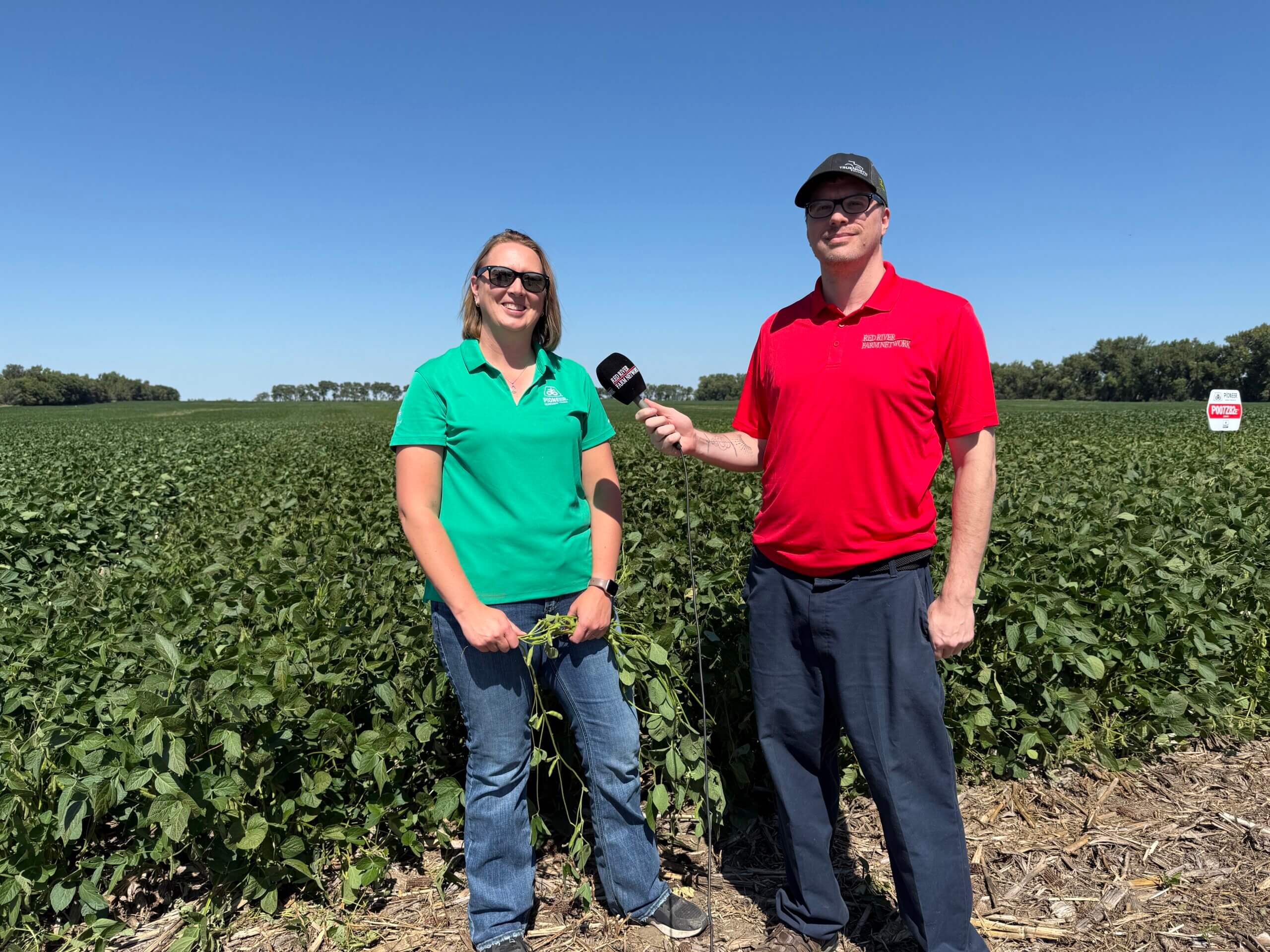
 Day #2 of the RRFN Crop Tour included stops near Langdon, Rolla and Bremen/New Rockford. “You can see the difference (in corn),” said Kristie Sundeen, field agronomist, Pioneer. “In Langdon, we were in the 1,400 range for GDUs and we get to Bremen and we’re over 1,600.” When considering corn, Sundeen advises farmers to go to NDAWN and look at the past two to three years of data. Pick a typical planting date and use the NDAWN GDU maps to determine an average date for the first front; that provides the far northern grower with valuable information for maturity decisions. With the moisture seen in northeastern North Dakota, white mold can be found in soybeans and canola in pockets. “The other thing we’re seeing is verticillium in canola. It’s in the later planting; anything from the 25th of May through June planting, that’s where we’re seeing the verticillium show up.” Watch the video.